Tankless Water Heater Questions, Answered
Is tankless really worth the higher upfront cost?
For most homes with 3+ occupants, multiple bathrooms, or high hot-water demand: yes. The math: tankless costs about $2,000 more upfront than a tank install but saves $200–$400/year in energy and lasts twice as long. Payback period is 8–10 years; after that, you're saving money plus you have a unit with another decade of life. For small homes with low demand, a tank is often the better economic choice — we'll be honest about which fits your situation.
How long does a tankless installation take?
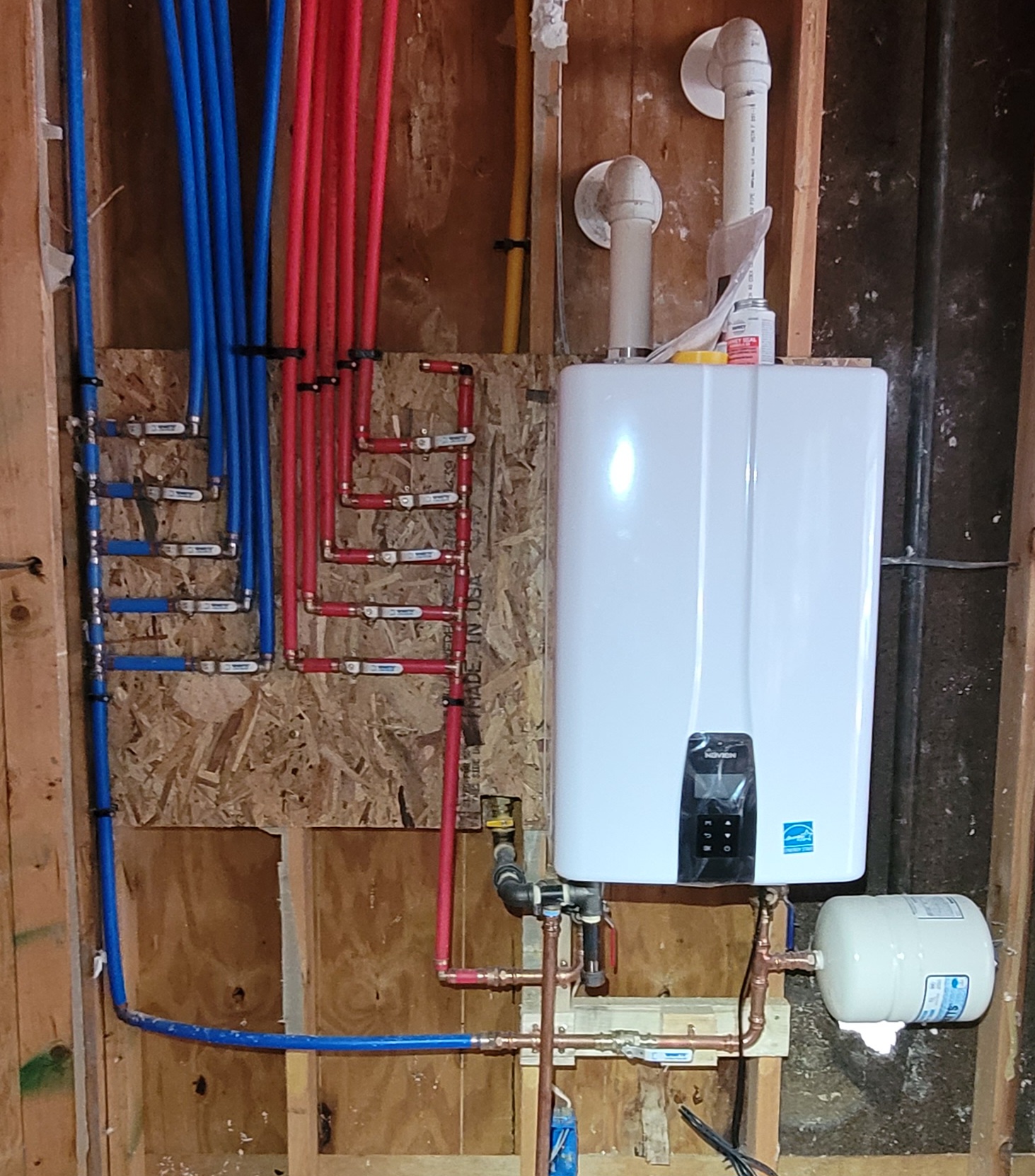
Most whole-home tankless conversions take 4–8 hours in a single visit. Jobs requiring a gas meter upgrade, long gas line runs through finished walls, or complex venting routes sometimes spread across two days. We give you a realistic timeline as part of the quote — no "we'll be done by lunch" estimates that turn into three days.
Will my tankless really never run out of hot water?
Correct — as long as the unit is properly sized for your home's demand. A correctly-sized tankless can run multiple showers, dishwasher, and laundry simultaneously without dropping water temperature. The catch: if the unit is undersized for the home, you'll feel temperature drops during peak use. That's why we do an actual sizing calculation before recommending a specific unit.
Do tankless water heaters work in cold Ohio winters?
Yes — modern tankless units handle Ohio winter temperature rise without issue. The incoming groundwater is colder in winter (around 50°F vs. 60°F summer), which means the unit works harder to hit your set temperature. A properly sized unit handles this; an undersized one might struggle. The unit itself doesn't freeze in unheated basements as long as it's plugged in (it has freeze-protection features).
What maintenance does a tankless need?
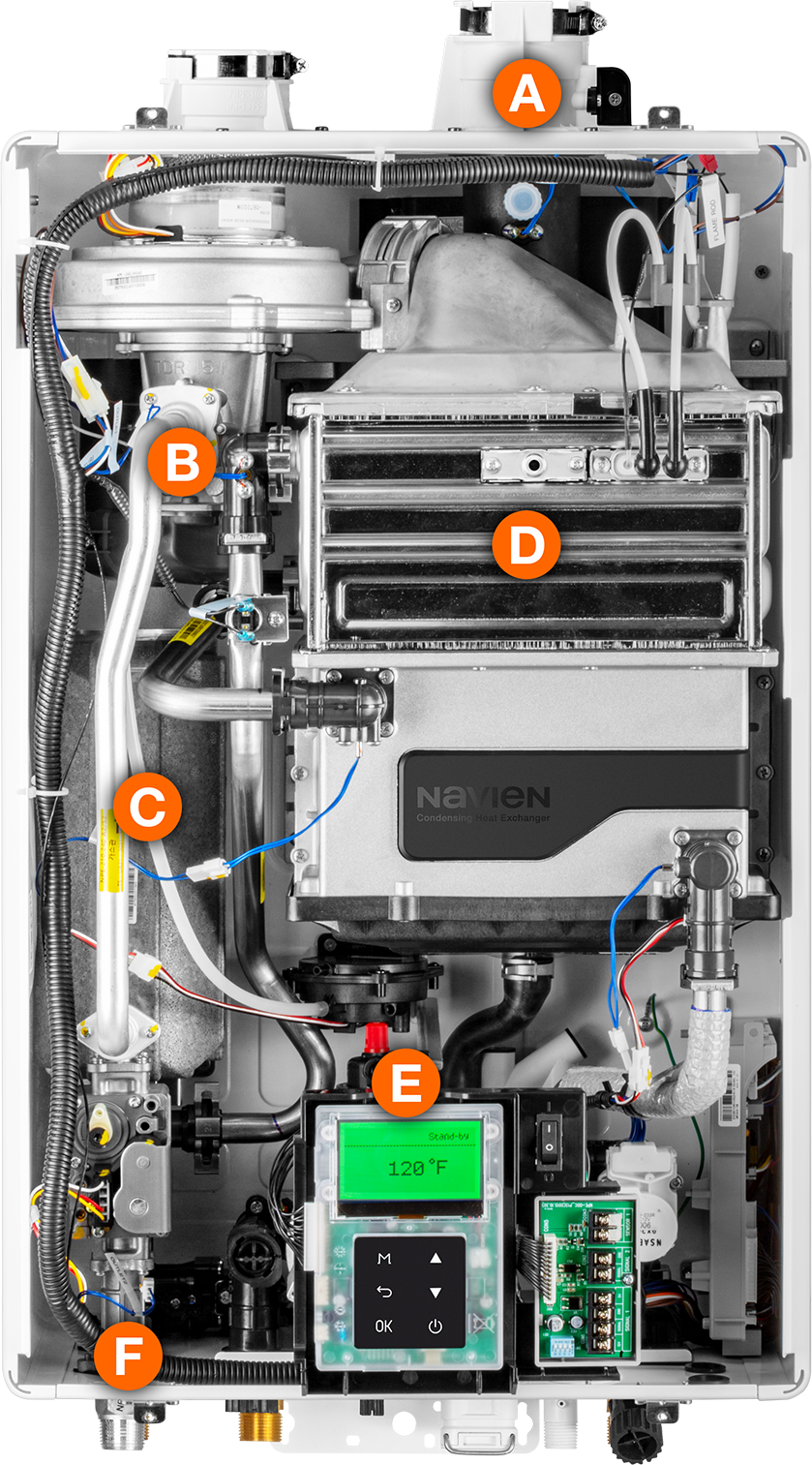
Annual descaling is the single most important maintenance task. Cleveland water has moderate hardness, and minerals build up inside the heat exchanger over time. Annual descaling (typically $150–$250 if you have us do it) keeps the unit running at peak efficiency and extends its life. Most homeowners with water softeners can stretch this to every 18–24 months.
Can I install a tankless water heater myself?
Strongly not recommended. Tankless installation involves gas line work (carbon monoxide and explosion risk if done wrong), venting (CO risk if done wrong), permits (cities require licensed plumbers), and warranty considerations (DIY voids most manufacturer warranties). The cost savings of DIY disappear the first time something fails — and since tankless involves gas, "something fails" can mean a real safety problem.
What size tankless do I need?
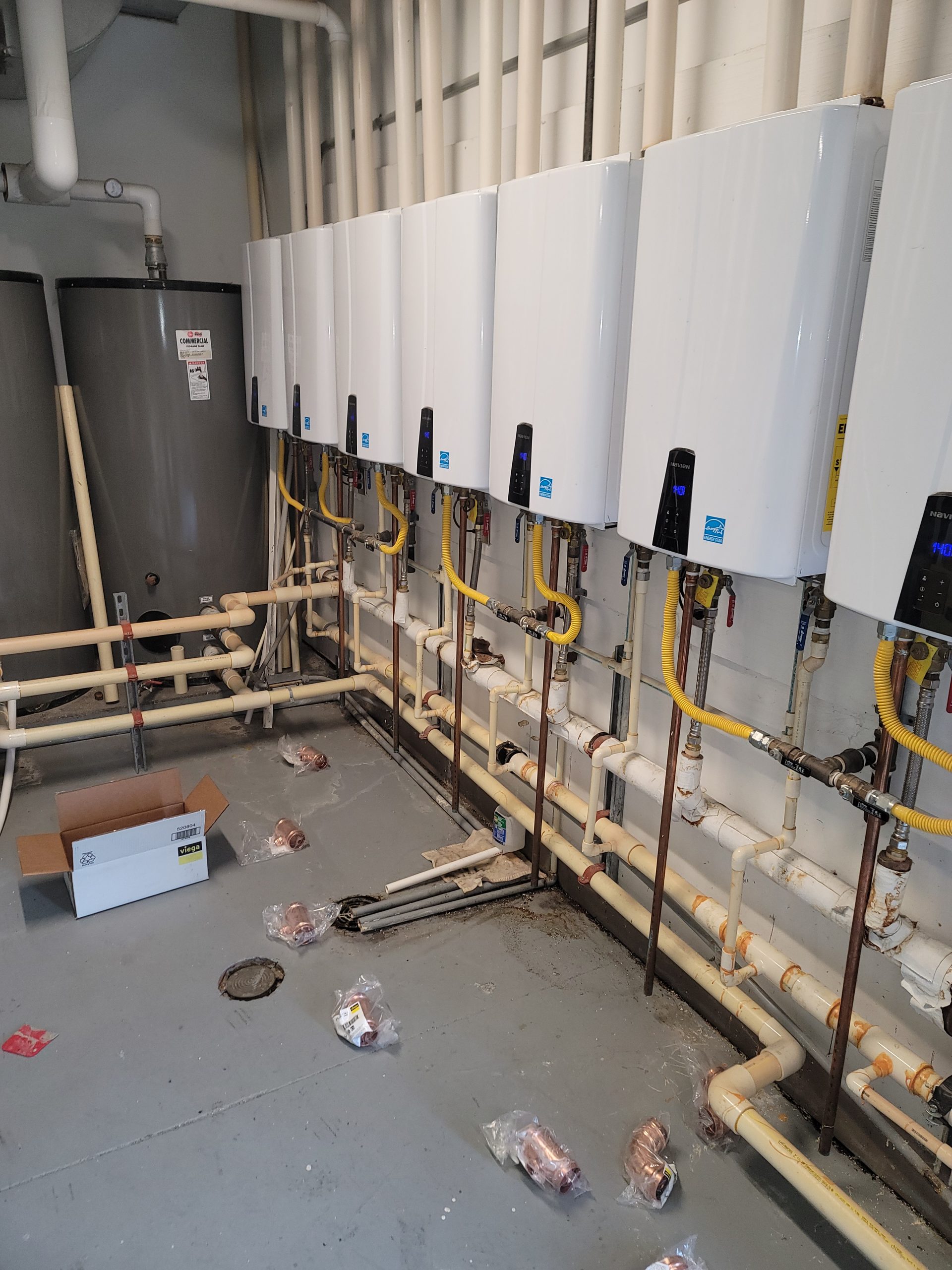
Depends on flow rate (GPM) and temperature rise. Rough guide for Cleveland: one-bathroom homes need 4–5 GPM units, two-bath homes need 7–8 GPM, three+ bath homes need 10+ GPM. We'll do an actual sizing calculation for your specific home before recommending a unit — undersized means disappointed customer, oversized means wasted money.
Do you charge for tankless estimates?
Estimates are free for any visible / accessible install. We come out, look at the gas line, venting route, and electrical situation, and give you an exact quote. The only times we charge are when diagnostic work needs destructive access: $99 to take valves apart (credited back if you proceed), or $150 to cut open drywall or ceiling (includes debris haul-away). Always told upfront.
Do you offer financing on tankless installs?
Yes. Wisetack — $500 to $25,000, terms up to 120 months, 0% APR options on qualifying credit. Soft credit check (no impact on your score). A typical $4,500 tankless install runs about $94/month at 0% APR for 48 months. We quote the job first, then send a personalized pre-qualification link.